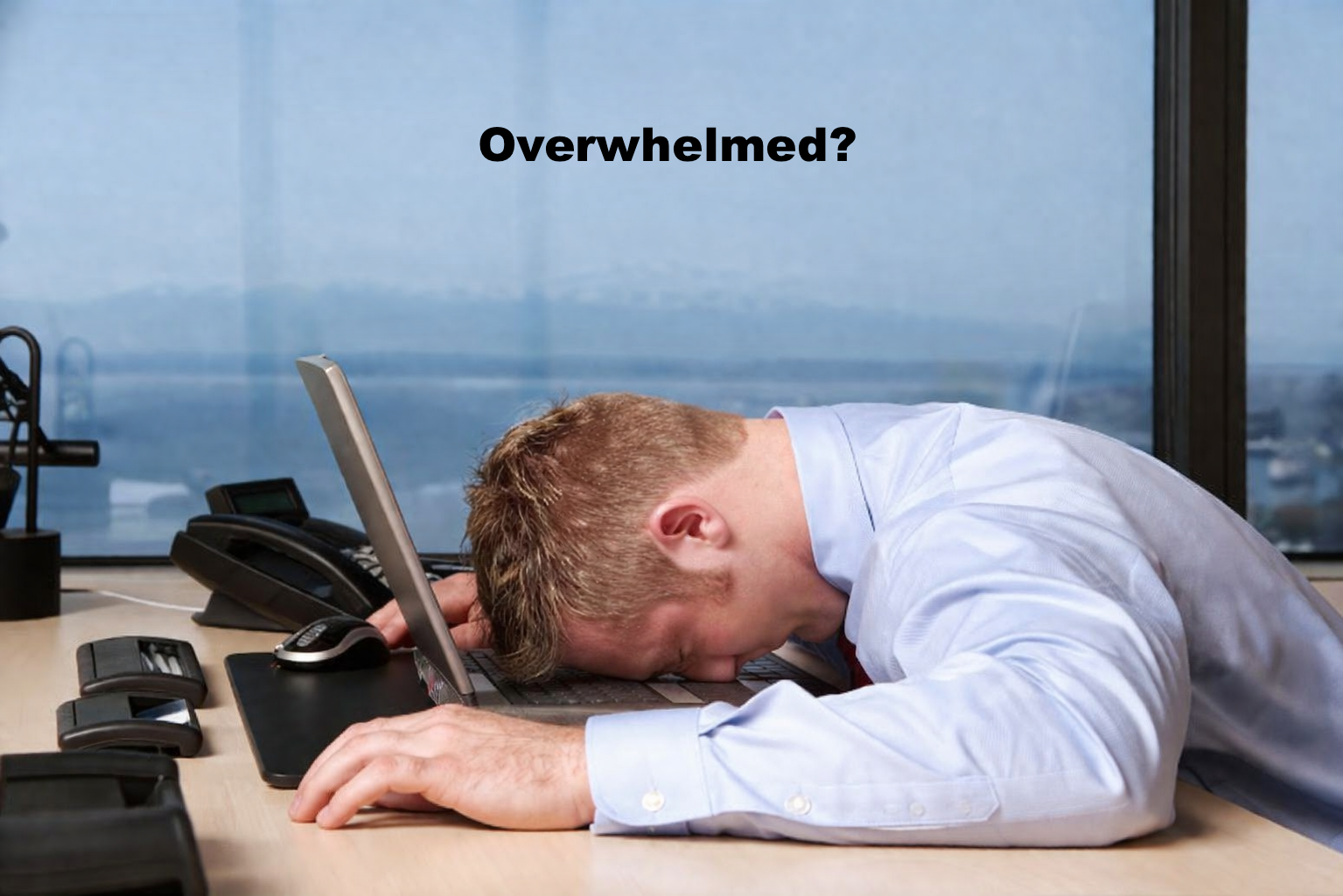
There’s a moment that shows up before most problems get worse. It’s subtle, but if you’ve felt it, you know exactly what it is.
Everything starts to speed up.
Your breathing gets shallow. Your thoughts stack on top of each other. You feel like you need to do something right now, even if you’re not entirely sure what that something is.
That’s panic.
And panic happens. It’s human. I still feel it.
Rolling Smooth doesn’t require you to eliminate that feeling. It requires you to recognize it and not act on it immediately.
Because that’s where things go sideways. Not because you don’t know what to do, but because you try to do it too fast.
I use a simple phrase to remind myself in that moment:
Don’t pour concrete.
Concrete is easy to pour. You can do it fast. But once it sets, you’re stuck with it. Bad decisions work the same way. When you act too quickly under pressure, you lock yourself into something that’s harder to undo than it needed to be.
And sometimes that’s not a decision. Sometimes it’s words.
I’ve been there more times than I care to count. Frustration shows up, things are moving fast, and before you’ve had a chance to slow down, something comes out that you can’t take back. Maybe it’s sharp. Maybe it’s unfair. Maybe it lands harder than you intended.
You can apologize. You can explain where you were coming from. But people remember how you made them feel. Those moments stick longer than we want them to, and they’re a lot harder to clean up than they ever were to create.
That’s another form of pouring concrete. And it usually happens faster than you realize.
Slowing down is how you avoid that.
This isn’t about stepping away for hours or ignoring the problem. It’s about changing your state so you can deal with it properly. Sometimes that means taking a few deep breaths. Sometimes it’s walking away for five minutes. I’ve taken short bike rides to clear my head. It doesn’t take long, but it makes a difference.
Once your breathing slows, your thinking follows. What felt overwhelming begins to break apart. You can see what matters and what doesn’t. You can think clearly and move with intention instead of reacting to pressure.
That’s when you’re ready to evaluate.
I didn’t set out to create the Rolling Smooth Mindset. I realized one day I’d already been living it. A couple of years ago, a manager of mine gave me the tools that put me on this path. When I told her later what it had turned into, she laughed and said, “I gave you the tools, but it was up to you to implement them. Sounds like my lessons sunk in.”
They did. Not because I memorized anything, but because I used it when things got hard.
Slowing down is the first step because everything else depends on it. If you skip it, you might still solve the problem, but you’ll do it with more stress, more effort, and a higher chance of making things worse along the way.
Panic might still show up. That’s fine.
Just don’t pour concrete.
Slow down, get your footing, and then move forward with a clear head and steady hands.